Market & News
This Week in Property – 9 November 2026

Welcome to This Week in Property, our regular round-up of the news that matters if you are buying, selling or letting a home in Scotland. This week the Bank of England raised interest rates for the first time in more than three years, Scotland’s house prices kept rising while the UK average fell, landlords learned they will wait until 3 December for their Scottish tax rate, and Glasgow signed off a £674 million housebuilding plan.
Bank Rate rises to 4% – the first increase since August 2023
On 5 November 2026 the Bank of England’s Monetary Policy Committee voted 8-1 to raise Bank Rate by 0.25 percentage points to 4%, with one member wanting a half-point rise. The Bank said UK CPI inflation rose to 3.5% in September and “is now expected to rise to around 5% by the middle of next year” because of energy prices, but stressed that policy “is not on a pre-set path”. Governor Andrew Bailey said the rise should not be read as the start of an inevitable series.
Why it matters: anyone on a tracker or standard variable rate pays more from their next statement, and buyers’ budgets tighten a little. Sellers who price to the Home Report rather than hoping for a stretch will find the serious buyers. Our guide to how to sell a house in Scotland explains how pricing and the closing date work together.
UK prices fall 1.2% in a year, Scotland rises 2.8%
The Lloyds House Price Index for October 2026 (formerly the Halifax index, published 6 November) puts the UK average at £296,285, down 0.6% in the month and 1.2% in a year, the biggest annual fall since October 2023, after four months of monthly declines. Scotland is the other way round: an average of £222,667 and annual growth of 2.8%, behind only Northern Ireland among the UK nations. Nationwide’s October index (30 October) told the same UK story, with annual growth of 0.5%, the slowest since January 2024, and prices flat on the month.
Why it matters: the national headlines are about falling prices; the Scottish figures are not. Ayrshire and Glasgow sellers can take confidence from that, but the gap between a well-priced home and an optimistic one is widening. Our Ayrshire property market overview has the local picture.
Landlords: the Scottish tax decision comes on 3 December
After the UK Budget of 28 October added a further two percentage points to the tax on rental income from April 2027 for landlords living in England, Wales and Northern Ireland, the Scottish Association of Landlords urged Scottish ministers on 5 November not to copy it, calling the combined four-point surcharge since 2025 a “tenant tax” that could add about £40 a month to rents if passed on. Since the Finance Act 2026 Holyrood can set its own rate on property income, and the decision is expected in the Scottish Budget on Thursday 3 December 2026.
Why it matters: a landlord who lives in Scotland does not yet know their 2027-28 rate on Ayrshire or Glasgow rental income. Until then, the costs you can control are covered in our guides to letting agent fees in Scotland and how much a landlord can increase rent.
Rents: Scotland back to growth, Glasgow flat
Citylets’ Q3 2026 report, published in October, puts the average advertised rent in Scotland at £1,247 a month, up 2.5% in a year after two negative quarters, with homes taking 28 days to let. Glasgow was flat at £1,230 (0.0% annual change) and took 27 days to let, six days longer than a year ago; one-bed flats edged up 0.7% while three- and four-bed homes fell 2.7% and 2.6%.
Why it matters: in Glasgow especially, rental growth can no longer be assumed, and larger homes are taking longer to find tenants. Pricing to the market and presenting well matter more than they did two years ago; our landlord checklist covers the compliance side.
New homes: £674 million for 6,500 in Glasgow, 32 flats beside Ayr Marina
Glasgow City Council has approved its housing investment plan for 2027 to 2032 (6 November), backed by £674 million to deliver more than 6,500 affordable homes, with 59 sites that could take the total past 12,000 if further funding follows; 74% are for social rent and 24% for mid-market rent. In Ayrshire, Ayrshire Housing reported on 3 November that 32 one- and two-bedroom flats beside Ayr Marina, with solar panels and EV charging, are nearing completion for tenants in early 2027, the first of 91 homes in its plan to 2030.
Why it matters: mid-market rent adds competition for Glasgow landlords at the affordable end, and new energy-efficient homes set the standard tenants compare private lets against. Buyers weighing up the city can start with our guide to buying a home in Glasgow.
Ardrossan Harbour: the public gets its say on the rebuild
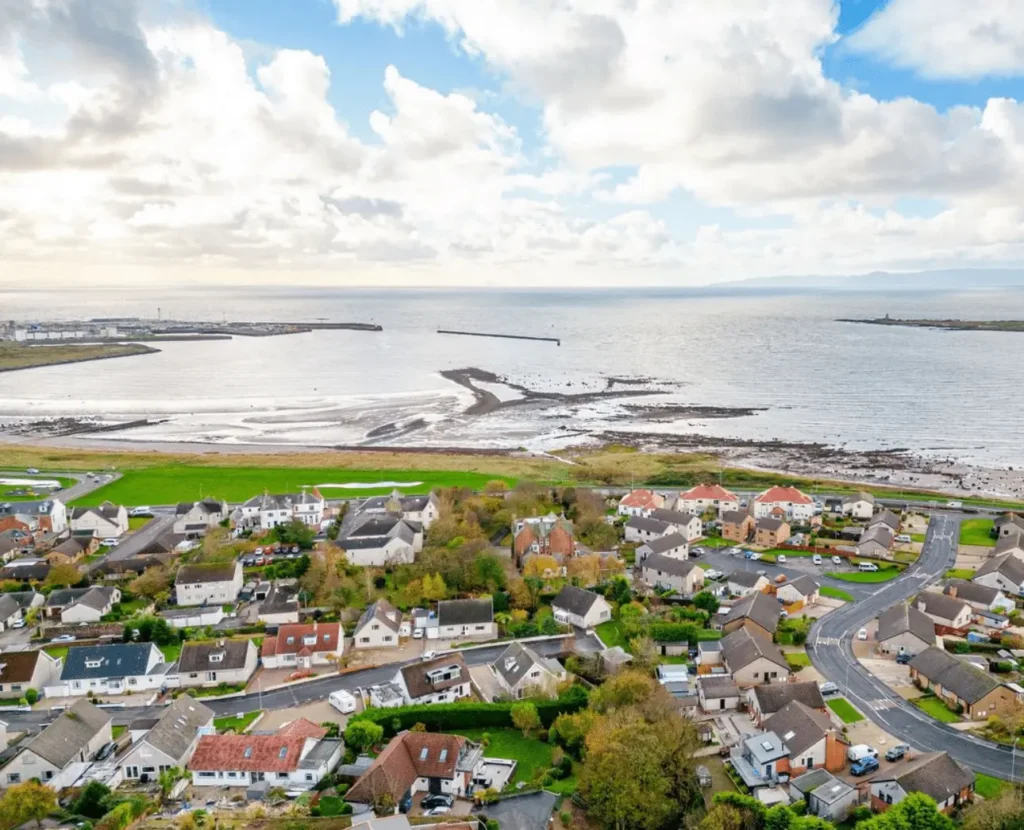
Caledonian Maritime Assets Ltd, which bought Ardrossan Harbour for the Scottish Government in March 2026, held a public drop-in on 28 October at Ardrossan Civic Hall on the redevelopment of the Arran ferry port, with a Brodick session on 10 November. The Ardrossan berth reopened on 8 October after a month of fender and linkspan repairs, and CalMac’s winter timetable runs the Caledonian Isles from Ardrossan alongside the Troon sailings; from 19 January to 25 March 2027 Arran will be served from Ardrossan only.
Why it matters: the harbour, the £124.6 million community campus due to open in August 2028 and the North Shore housing land make Ardrossan one of the most interesting towns in North Ayrshire for buyers who like to get in early. Our North Ayrshire property guide covers the coast from Largs to Irvine.
The bottom line
Rates are up a notch, Scottish prices are still rising while the UK falls, and the next big dates are the ONS house price and rent figures on 18 November and the Scottish Budget on 3 December. If you are thinking about a move in the new year, the best time to find out what your home is worth is now: book your free, no-obligation valuation or get in touch with your local branch.
looking to sell your home?
need something else?
Check out some of our latest blog posts.
Living in Ardrossan: A Local’s Area Guide
This Week in Property – 9 November 2026

How Much Does It Cost to Sell a House in Scotland? Every Fee Explained

This Week in Property – 2 November 2026

How Much Can a Landlord Increase Rent in Scotland? The 2026 Rules Explained

This Week in Property – 26 October 2026

This Week in Property – 19 October 2026

Landlord Registration in Scotland: Who Must Register, What It Costs and What Happens If You Don’t